
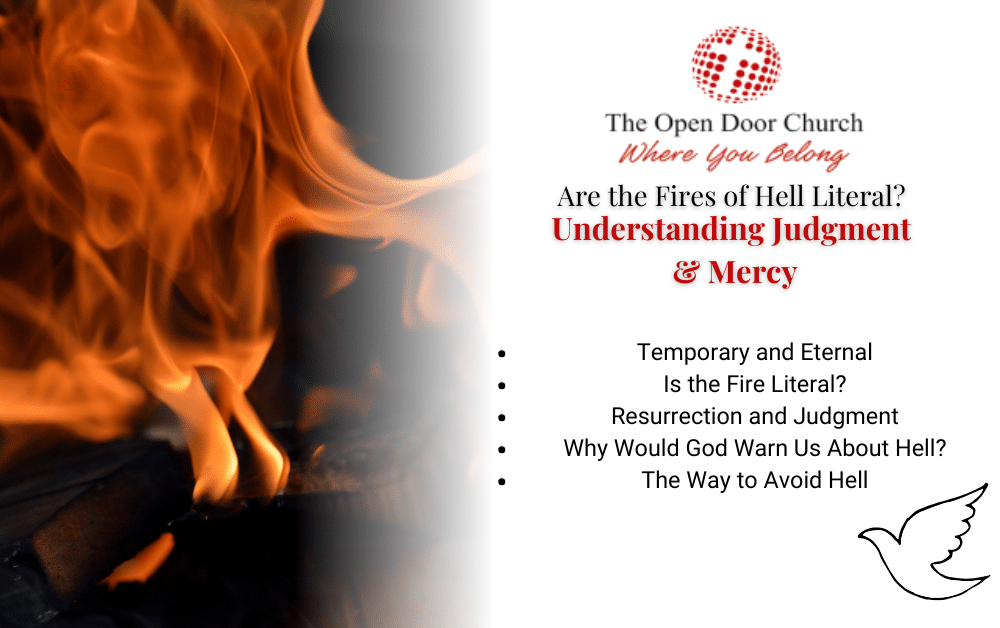
For many, hell is a difficult subject to think about—let alone talk about. Yet Scripture speaks plainly about it, and Jesus Himself addressed it often. If we want to understand the full counsel of God’s Word, we cannot speak only of heaven without also addressing hell. Both are real. Both matter. And both reveal the justice and mercy of God.
In this message from Hope Worth Having, Pastor Mike Sanders walks through Revelation 20 and other key passages to answer a serious and eternal question: Are the fires of hell literal?
Hell in the Bible: Temporary and Eternal
Scripture teaches that those who die without Christ are currently in what the Bible refers to as Hades, Sheol, or Gehenna—a temporary place of separation from God. Believers, however, are immediately in the presence of the Lord.
But Revelation 20 reveals something even more sobering: there is a final destination known as the Lake of Fire. This is the eternal judgment prepared for the devil, his angels, and all who reject Jesus Christ.
“Anyone not found written in the Book of Life was cast into the lake of fire.”
— Revelation 20:15
This judgment occurs at the Great White Throne, where unbelievers are judged—not for rewards, but for rejection of Christ. Believers will never face this judgment, because Jesus already bore our punishment on the cross.
Is the Fire Literal?
Many today argue that the fires of hell are symbolic or metaphorical. However, the Bible repeatedly describes hell as everlasting fire, outer darkness, torment, and weeping and gnashing of teeth.
Jesus referenced Gehenna, a real burning valley outside Jerusalem, to help people understand the reality of judgment. He spoke of a fire that does not consume, yet continually torments—a unique fire created by God for eternal judgment.
If Scripture speaks literally about resurrection, judgment, and salvation, why would we suddenly reinterpret hell as symbolic? To do so undermines biblical authority and places human reasoning above God’s Word.
Hell is not described this way to entertain curiosity—it is described to warn.
Resurrection and Judgment
Just as believers will receive glorified bodies, Scripture teaches that unbelievers will also be resurrected—body, soul, and spirit—to face final judgment. This is not myth or speculation. Jesus plainly taught it.
Hell is not annihilation. It is conscious, eternal separation from God.
This truth should sober us—not harden us.
Why Would a Loving God Warn Us About Hell?
The teaching of hell is not cruel—it is merciful.
If you knew a bridge was out ahead, you would warn others. If you saw a house on fire, you would rush to alert those inside. God warns us about hell because He does not delight in the death of the wicked.
“I have no pleasure in the death of the wicked, but that the wicked turn from his way and live.”
— Ezekiel 33:11
Hell exists, not because God is unjust, but because He is holy. And salvation exists because He is merciful.
The Way to Avoid Hell
The Bible is crystal clear: salvation is found in Jesus Christ alone.
“For God so loved the world that He gave His only begotten Son, that whoever believes in Him should not perish but have everlasting life.”
— John 3:16
Jesus holds the keys to death and hell. He has the authority to save. When you trust in Him, your name is written in the Lamb’s Book of Life, and your eternal destination is secure.
Hell was not created for humanity, but those who reject Christ choose separation from Him.
A Call to Respond
We do not teach on hell to frighten people, but to faithfully proclaim truth. Scripture calls us to preach both judgment and grace, both warning and hope.
If the reality of hell causes you to pause, to reflect, or to turn toward Christ—that is not fear wasted. That is mercy at work.
Do not neglect so great a salvation.
In Christ, there is hope worth having.
If you want to learn more, explore biblical teaching, or grow in your understanding of Scripture, visit Hope Worth Having on YouTube or stay connected through The Open Door Church.