
Forgiveness isn’t a mysterious formula. It isn’t a “try harder” strategy or a motivational trick that suddenly makes difficult relationships easy. Biblical forgiveness begins in one place: the foot of the cross.
When you and I ask, “Why should I forgive?” the clearest answer is also the simplest: because Christ has forgiven us. That truth doesn’t erase the pain of what happened, and it doesn’t pretend that wrongs are small. But it does give believers the right foundation for a forgiving heart—one that is shaped by grace, truth, and spiritual maturity.
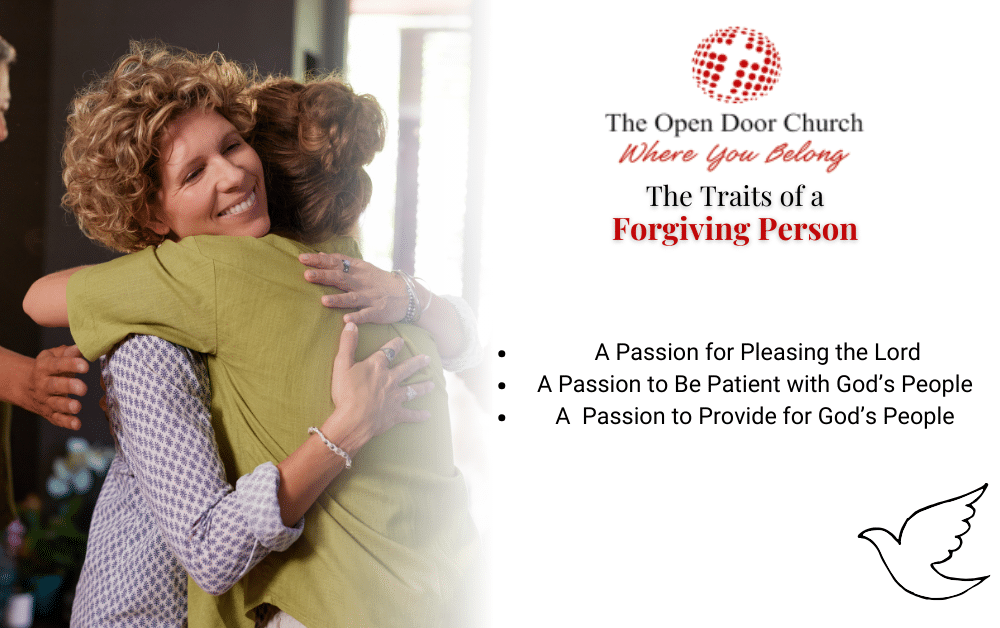
In this message drawn from the book of Philemon, Pastor Mike Sanders teaches that forgiveness is not only an action; it flows from a certain kind of character. If we want to become people who forgive, we need more than good intentions—we need Christlike traits that guide our relationships in the home, in the church, and in everyday life.
Why the Book of Philemon Matters for Forgiveness
Philemon is a short New Testament letter, but it carries a powerful message about forgiveness and restored relationships.
Here’s the setting:
- Philemon was a Christian and a leader in the early church. Believers gathered in his home.
- Onesimus was a slave who had run away—and the story suggests he had also wronged Philemon financially.
- Paul met Onesimus while imprisoned and led him to faith in Jesus Christ.
- Paul then wrote to Philemon with a direct appeal: receive Onesimus back, not merely as property or a servant, but as a brother in Christ.
That request wasn’t small. Forgiveness rarely is. But Paul doesn’t approach Philemon with harsh pressure or public shame. Instead, he begins with encouragement—highlighting the character God has already been developing in Philemon’s life.
That’s part of what makes this letter so practical: it shows that forgiveness is connected to spiritual maturity. It grows best in a heart that wants to please the Lord, love God’s people, and build up the church.
The Real Reason Christians Forgive
There are many benefits to forgiveness—peace of mind, restored relationships, and freedom from bitterness. But for the Christian, forgiveness goes deeper than personal wellness.
We forgive because we have been forgiven.
That’s why Pastor Mike emphasizes that the motivation for forgiveness is not mystical or complicated. When we remember what Christ has done—how we were not worthy of mercy, how God cleanses us when we confess our sins—we begin to understand what forgiveness looks like from a gospel-centered perspective.
Forgiveness doesn’t mean sin is acceptable. It doesn’t mean the offender was “right.” It means we respond to wrongdoing with the grace God has shown us in Jesus.
And Philemon teaches us that this kind of forgiveness is supported by character—three traits that make a forgiving life possible.
1) A Passion for Pleasing the Lord
A forgiving person isn’t driven first by emotion, comfort, or convenience. They are driven by the desire to honor God.
Paul commends Philemon for his faith in the Lord Jesus and his love. That’s the starting point: faith that is real, living, and personal.
Not All “Faith” Is Saving Faith
Pastor Mike makes an important distinction: not every form of belief is saving faith. A person can know facts about Jesus without truly trusting Him. Scripture teaches that even demons recognize the truth about Christ, yet they do not belong to Him.
Saving faith is not merely:
- a childhood memory,
- a religious routine,
- or a prayer said without real repentance.
Saving faith is trusting in Jesus Christ alone for salvation—turning from sin and receiving Him as Lord.
That matters because forgiveness flows from the gospel. If we have not received Christ’s forgiveness, we cannot consistently give real forgiveness to others.
Love Is the Mark of a True Disciple
Jesus taught that the greatest commandment is to love the Lord with all your heart, soul, and mind. A true disciple desires God. A growing believer wants to please Him.
That doesn’t mean perfection. It means direction.
A helpful question is: What is the direction of my heart?
Do I want to honor God? Do I want to obey Him? Do I want to grow?
When that desire is present, forgiveness becomes less about “what they deserve” and more about “what honors the Lord.”
2) A Passion to Be Patient with God’s People
Forgiveness is not only spiritual; it becomes very practical the moment we deal with people.
The truth is simple: there are no lasting relationships without forgiveness.
- Marriages cannot endure without it.
- Families cannot stay healthy without it.
- Churches cannot thrive without it.
Pastor Mike also warns about a common pattern: when conflict happens, people often run instead of reconciling. While there are legitimate reasons someone might change churches, we should be careful not to avoid the biblical call to work through offense with humility and love.
Patience Begins with Love for People
Paul notes that Philemon’s love wasn’t limited to the people who were easy to love. It extended to “all the saints.”
That kind of love doesn’t mean we always like what someone does. It means we refuse to treat people as disposable. It means we remain committed to them as brothers and sisters in Christ.
Scripture connects love with spiritual life. A believer grows in the practice of loving others—even when personalities clash, expectations differ, or relationships feel difficult.
Patience Also Means Sharing Life Together
In Philemon, Paul describes a shared fellowship—what Scripture often describes as deep Christian partnership. Church is not only a service you attend; it’s a family you belong to.
And in any family, people are at different stages:
- Some are mature and steady.
- Some are needy and still healing.
- Some are learning basic discipleship.
- Some are carrying heavy burdens.
Patience grows when we remember that spiritual growth takes time—and that God is still working in all of us.
Patience Requires Biblical Understanding
Another part of patience is spiritual knowledge—knowing God’s Word, His will, and His ways.
As we grow, we learn:
- not to overreact,
- not to turn every disagreement into a crisis,
- not to treat every weakness as a permanent label.
Maturity makes space for people to grow. Forgiveness often becomes easier when we understand what God is doing in the long process of sanctification—both in them and in us.
3) A Passion to Provide for God’s People
Paul highlights that Philemon refreshed others. He strengthened believers. He lifted burdens. That kind of heart makes forgiveness more natural, because it refuses to focus only on faults.
Pastor Mike describes three practical needs every person has—at home and in the church.
People Need Appreciation
It’s easy to find what’s wrong. It’s easy to criticize, correct, and complain. But encouragement is a form of ministry.
A forgiving person develops an attitude of gratitude. They look for what is good, what is faithful, what is growing, and what God is doing in others—and they say it out loud.
Appreciation can be shown through:
- a text message,
- a note,
- a conversation,
- a public thank-you (when appropriate),
- or a simple word of affirmation.
When appreciation becomes normal in a church family, forgiveness becomes more natural—because the culture is not built on constant negativity.
People Need Inspiration
Paul begins Philemon by calling himself a prisoner of Jesus Christ. Even in hardship, he viewed his life through God’s sovereignty.
That mindset inspires others. It shows believers how to walk faithfully through challenges without becoming bitter, cynical, or harsh.
A forgiving person is not blind to pain—but they resist becoming defined by it. They keep their eyes on Christ, and their life encourages others to do the same.
People Need Refreshing Relationships
Paul says believers were “refreshed” by Philemon. The idea is like rest after a long march—relief, renewal, strength.
Some relationships drain us. Others build us up.
A forgiving person aims to be a refresher—someone who:
- strengthens faith,
- encourages hope,
- speaks truth with grace,
- and helps others keep going.
This does not mean avoiding hard conversations. It means refusing to make criticism your default contribution. It means remembering that people cannot grow where only their failures are constantly highlighted.
What Forgiveness Is (and Isn’t)
Because forgiveness is often misunderstood, it helps to say clearly what biblical forgiveness does and does not mean.
Forgiveness is:
- a decision to release personal vengeance
- a commitment to respond with Christlike grace
- a pathway toward restored relationship when repentance and trust are present
- a reflection of what Christ has done for us
Forgiveness is not:
- pretending sin didn’t happen
- calling wrong “right”
- removing all consequences automatically
- ignoring wisdom, boundaries, or accountability
Philemon shows both grace and responsibility: Onesimus is called to make things right, and Philemon is called to receive him as a brother. Truth and love meet together.
A Gospel Invitation: You Cannot Give What You Have Not Received
One of the most important truths in this teaching is this: you cannot give what you have not received.
If you have never received the forgiveness of Jesus Christ, you will always struggle to forgive in a truly biblical way. Forgiveness begins with the cleansing grace of God—when a sinner humbly repents and trusts Christ for salvation.
And even believers must return regularly to confession, allowing God to cleanse their hearts from sin, bitterness, pride, and selfishness.
When we live under God’s mercy, we become people who extend mercy.
Take the Next Step with The Open Door Church (Chambersburg, PA)
If you’re wrestling with forgiveness—whether you need to forgive someone or you need healing from your own past—you don’t have to walk that road alone.
At The Open Door Church in Chambersburg, PA, our desire is to help people grow into fully devoted followers of Jesus Christ through Bible teaching, Christian community, and gospel-centered discipleship.
If you’d like to connect with our church, learn more about the gospel, or listen to more messages that strengthen your faith, visit theopendoorchurchpa.com and take a next step today.